How to Get a Free VIN Check Before Buying a Car
JUMP AHEAD IN THIS ARTICLE
Whether you're checking a car before you commit to buying it or preparing to order its Certificate of Conformity, the VIN is where every check starts — and getting it right first saves you from ordering the wrong document for the wrong vehicle.
A free VIN check is one of the fastest ways to spot problems before you buy a car. It can help confirm the vehicle’s basic identity, reveal obvious data mismatches, uncover theft or salvage alerts in some markets, and give you clues about recalls, mileage, and import history.
It is not a full guarantee that a car is clean. Free VIN checks have limits, and databases vary by country. Still, if you know where to look and how to compare the results with the seller’s documents, you can avoid many costly mistakes before paying a deposit or booking an inspection.
Below is a practical, buyer-friendly process you can use before purchasing a used car, especially if the vehicle is imported or will need registration in another European country.
What Is a VIN and Why Does It Matter?
A VIN, or Vehicle Identification Number, is a unique identifier assigned to a vehicle. For most modern vehicles, it is a 17-character code made up of letters and numbers. It can identify key details such as the manufacturer, model year, production plant, body type, engine type, and sometimes the market the car was built for.
Think of the VIN as the car’s fingerprint. Unlike a license plate, which can change when a car is registered in another country or region, the VIN stays with the vehicle for its lifetime.
A VIN check matters because fraud often begins with inconsistent information. If the VIN on the car does not match the registration document, service records, purchase invoice, or Certificate of Conformity, you should stop and investigate before moving forward.
Common issues a VIN check can help reveal include:
- A vehicle advertised as a different model year or trim than the VIN suggests
- A car with possible theft, salvage, or insurance loss records
- Mileage inconsistencies when compared with inspection records
- Open safety recalls
- Imported vehicle history that the seller did not mention
- Document errors that could delay registration
A free VIN check is not only about avoiding scams. It also helps you ask better questions, negotiate more confidently, and prepare the correct paperwork if you decide to buy.
Step 1: Find the VIN in More Than One Place
Before you check the VIN online, make sure you have copied it correctly. A single wrong character can return the wrong vehicle or no result at all.
You can usually find the VIN in several places:
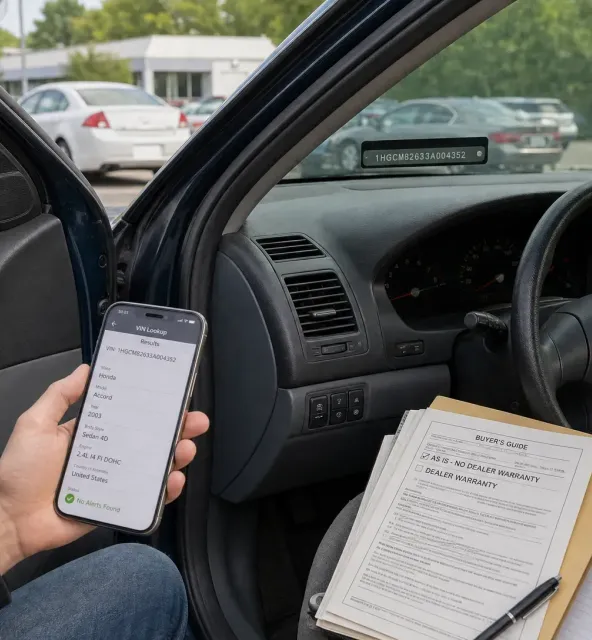
- At the base of the windshield on the driver’s side
- On the driver-side door frame or door jamb
- On the registration certificate
- On insurance documents
- In the service book or maintenance invoices
- Stamped on the chassis or visible in the engine bay, depending on the vehicle
For a safe purchase, compare the VIN in at least two physical places on the car with the VIN shown on the documents. The numbers should match exactly.
Also watch for suspicious signs around VIN plates or stamped chassis numbers. Scratched rivets, uneven metal, fresh paint around the VIN area, or unreadable stamping can indicate tampering. Not every damaged VIN area means fraud, but it should always be investigated by a professional before you buy.
Step 2: Decode the VIN for Free
The first free step is decoding the VIN. A VIN decoder can tell you whether the number structure is valid and whether the basic vehicle details align with the seller’s claims.
For European vehicles, many manufacturers and national registration portals provide some free lookup tools, though the amount of information available varies. Some independent sites also offer basic decoding for free, but you should treat those results as a starting point, not as proof of the car’s history.
When decoding a VIN, compare the result with the advertisement. If the seller says the car is a 2021 diesel estate but the VIN decodes as a different body type, model year, fuel type, or market version, ask for clarification. Honest listing mistakes happen, but major inconsistencies should be treated as red flags.
Step 3: Check for Theft, Salvage, and Insurance Records Where Available
Free theft and salvage checks depend heavily on the country where the car has been registered. In some markets, public data is limited. In others, free tools can reveal serious warnings.
In Europe, look for official national databases or recognized vehicle history systems in the country where the car was previously registered. For example, some countries provide free or low-cost access to inspection history, mileage readings, tax status, or registration information. The key is to use official sources whenever possible.
Be careful with sellers who say, “The VIN check is clean,” but only show you a screenshot from an unknown website. Ask for the exact VIN and run your own checks.
Step 4: Look Up Recalls and Safety Information
A free VIN check can also help you identify open recalls. Recalls are not always a reason to reject a car, since many are repaired free of charge by the manufacturer. However, open safety recalls should be taken seriously.
Ask the seller for service invoices showing recall repairs or campaign work. If they cannot provide proof, factor the time and inconvenience into your decision. A car with several open recalls may still be a good purchase, but you should know what needs attention before driving it regularly.
Step 5: Compare Mileage and Inspection Records
Mileage fraud remains one of the biggest risks in the used car market. A free VIN check may not always show mileage, but inspection databases and service records can help you build a timeline.
Start by asking for:
- The service book
- Maintenance invoices
- Previous inspection certificates
- Registration documents
- Dealer or workshop records
Then check whether the mileage increases logically over time. A car showing 82,000 km today but 130,000 km on an inspection record three years ago requires a very convincing explanation.
For cars with UK history, the official MOT history service can be especially useful because it may show past mileage readings, inspection results, and advisories. Other countries have their own systems, so search for the official vehicle inspection or registration authority in the relevant country.
Step 6: Check the VIN Against the Seller’s Documents
Once the free online checks look acceptable, move to document verification. This step is often where buyers find the issues that create registration delays later.
The VIN should match across every document, including the registration certificate, purchase invoice, technical inspection, service records, customs papers if applicable, and Certificate of Conformity if the vehicle is being imported or registered in another European country.
If you are buying an imported vehicle, the paperwork matters as much as the mechanical condition. Missing or inconsistent documents can delay registration, trigger additional inspections, or create unexpected costs. For a broader overview of what is typically needed, see this guide to registering an imported vehicle in Europe.
A Certificate of Conformity, often called a COC, confirms that a vehicle conforms to the applicable European type approval specifications. Depending on the country and situation, it may be needed to register an imported car. If the seller claims a COC is included, check that the VIN on the certificate matches the vehicle exactly.
Step 7: Search the VIN Online
This step is simple but often overlooked. Copy the VIN and search it in a search engine with quotation marks around it. You may find old auction listings, sales ads, forum posts, recall discussions, or photos from a previous sale.
This can be especially useful for imported cars. Sometimes a vehicle is advertised locally as “accident-free,” but an old auction listing from another country shows visible damage before export.
If you find older listings, compare:
- Mileage at the time of the previous sale
- Photos of damage or repairs
- Trim level and equipment
- Country of origin
- Color and body style
- Seller claims versus historic information
No search result does not mean the vehicle is clean. But if the VIN appears in a salvage auction or damage listing, take that information seriously.
Step 8: Protect Yourself During the Viewing
A VIN check is part of a wider safety process. When meeting a private seller, choose a safe location, bring another person if possible, and avoid carrying large amounts of cash. If the seller refuses to meet at the registered address or does not want you to inspect the VIN locations, be cautious.
During the viewing, do not let excitement rush the process. Take photos of the VIN, documents, odometer, tires, dashboard warning lights, and any visible damage. If you later notice something inconsistent, you will have evidence to review before signing.
What a Free VIN Check Cannot Tell You
Free VIN checks are useful, but they are not complete. A clean free check does not guarantee that the car has never been damaged, clocked, stolen, repaired poorly, or used commercially.
There are several reasons for this. Some databases are not connected across borders. Some insurers, workshops, or auction houses do not report to public systems. Some records are delayed. In some countries, privacy rules limit what can be shown to the public. And some older vehicles may have incomplete digital histories.
A free VIN check also cannot replace a physical inspection. It will not tell you whether the engine has been neglected, whether the transmission shifts properly, whether structural repairs were done badly, or whether electronic faults are hidden.
For higher-value purchases, imported vehicles, or cars with limited documentation, consider combining your free checks with a professional inspection and, where available, a paid vehicle history report.
Red Flags That Should Make You Walk Away
Some issues need clarification. Others are strong signs that you should stop the purchase entirely.
Be very cautious if:
- The seller refuses to provide the VIN before the viewing
- The VIN on the car does not match the documents
- The VIN plate appears altered, damaged, or recently replaced
- The decoded vehicle details do not match the advertised car
- Mileage records move backward or show unexplained gaps
- The seller pressures you to pay quickly before checks are complete
- The car is much cheaper than similar models with no clear reason
- The seller cannot explain import history or missing paperwork
- The name on the registration document does not match the seller’s identity
A good seller should understand why you want to check the VIN. If they become defensive or evasive, that is useful information in itself.
Why VIN Accuracy Matters for a COC
If you plan to register an imported car in Europe, the VIN is not just a history-checking tool. It is also essential for paperwork.
A small VIN error can delay a Certificate of Conformity order, create mismatches with registration documents, or require additional clarification. Before ordering any official document, compare the VIN carefully with the car and registration certificate.
If you are preparing to order a Certificate of Conformity online, this guide on how to order a COC online without delays explains common mistakes that slow the process, including incorrect VINs and unreadable documents.
For buyers importing a car to Germany specifically, the registration process has its own practical steps and requirements. You can review them in this guide to importing a car to Germany.
Once the VIN checks out, the next step for an imported vehicle is usually the paperwork: order your official Certificate of Conformity from 321COC with the VIN you've just verified.
Frequently Asked Questions
Can I do a VIN check for free? Yes. You can decode a VIN for free and, depending on the country, check theft, recall, inspection, or mileage information through official or public databases. Free data is limited, so use it as a first screening step.
Is a free VIN check enough before buying a car? Not usually. A free VIN check can reveal obvious issues, but it should be combined with document verification, a physical inspection, a test drive, and possibly a paid history report for higher-risk purchases.
Where is the VIN located on a car? Common locations include the lower windshield area, driver-side door frame, registration certificate, insurance papers, service records, and sometimes the engine bay or chassis stamping.
What if the VIN does not match the registration document? Do not buy the car until the mismatch is fully explained and corrected by the appropriate authority. A VIN mismatch can indicate a paperwork error, but it can also suggest fraud or vehicle identity problems.
Do I need the VIN to order a Certificate of Conformity? Yes. The VIN is essential when ordering a COC because the certificate must match the exact vehicle. Always copy it carefully from the vehicle and official documents before submitting an order.
Ready to Buy an Imported Car With Confidence?
A free VIN check helps you avoid obvious risks before buying a used car. If the vehicle is imported or will be registered in another European country, the next step is making sure your registration paperwork is complete.
With 321COC, you can order official vehicle Certificates of Conformity online for many car brands across Europe, with a secure process, transparent pricing, and EU-compliant documents. Check the VIN carefully first, then prepare your COC and registration file with confidence.