What Is a SABER Certificate of Conformity?
JUMP AHEAD IN THIS ARTICLE
If you searched for a SABER Certificate of Conformity, you are most likely dealing with goods being imported into Saudi Arabia, or you are trying to understand whether this document is the same as a vehicle Certificate of Conformity used in Europe.
The short answer is simple: a SABER Certificate of Conformity is a Saudi import compliance document. It is not the same as an EU vehicle COC, although both documents use similar language and both prove conformity with specific rules.
For importers, exporters, logistics teams, and vehicle owners, that distinction matters. Using the wrong certificate can delay customs clearance, block registration, or create unnecessary costs.
What is a SABER Certificate of Conformity?
A SABER Certificate of Conformity is an electronic certificate used in Saudi Arabia to confirm that imported products comply with applicable Saudi standards and technical regulations. It is issued through the official SABER platform, which is connected to Saudi Arabia's product safety and import conformity system.
SABER is operated under the framework of the Saudi Standards, Metrology and Quality Organization, commonly known as SASO. SASO is the authority responsible for setting and supervising many product standards in Saudi Arabia.
In practical terms, the SABER system helps Saudi authorities check that imported goods are safe, correctly classified, and compliant before they reach the market. For many regulated products, importers need the correct certificate before customs clearance can be completed.
A SABER COC may apply to many types of products, including consumer goods, electrical items, building materials, textiles, machinery, automotive parts, and other regulated categories. The exact requirement depends on the product, its HS code, and the applicable Saudi technical regulation.
SABER, SASO, and SALEEM: how they fit together
The terminology can be confusing because several names are often used together.
SASO is the Saudi Standards, Metrology and Quality Organization. It sets standards and technical regulations for many products entering or sold in Saudi Arabia.
SALEEM is Saudi Arabia's product safety program. Its purpose is to help ensure that products placed on the Saudi market meet the relevant safety and conformity requirements.
SABER is the online platform used to register products and issue conformity certificates under this system.
So, when someone asks for a SABER Certificate of Conformity, they usually mean a certificate generated through the SABER platform as part of Saudi import compliance.
The two main types of SABER certificates
Most import compliance workflows in SABER involve two different certificates. They are related, but they are not interchangeable.
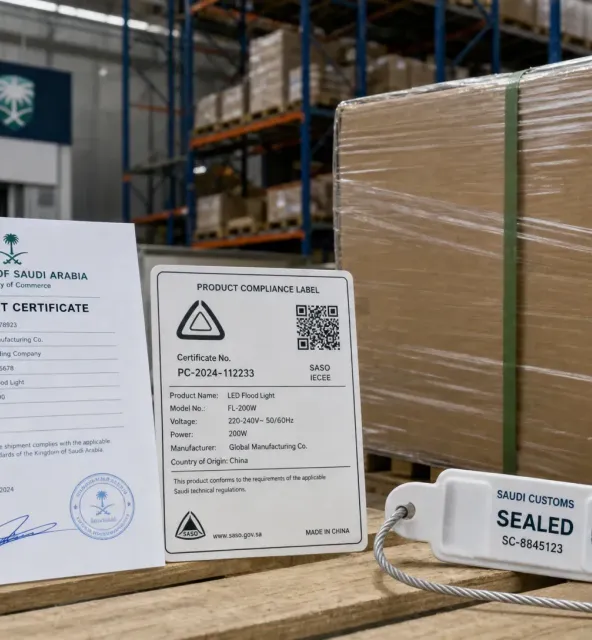
- Product Certificate of Conformity (PCoC): This certificate applies to a specific product or product model. It confirms that the product meets the relevant Saudi technical regulations. A PCoC is typically valid for one year, provided the product details and applicable rules do not change.
- Shipment Certificate of Conformity (SCoC): This certificate applies to a specific shipment. It is linked to the relevant Product Certificate of Conformity and is usually required for customs clearance for that shipment.
Think of the Product COC as the compliance approval for the product itself, while the Shipment COC is the customs-facing document for the batch being imported.
For non-regulated products, the process may be simpler and may involve a self-declaration route through the platform. However, importers should never assume a product is non-regulated without checking the HS code and the current Saudi requirements.
Who needs a SABER Certificate of Conformity?
The Saudi importer is usually the party responsible for obtaining the required SABER certificates. In many cases, the importer creates or manages the request through SABER and selects an approved conformity assessment body when third-party review is required.
Exporters and manufacturers also play an important role. They may need to provide technical files, test reports, product photos, labels, user manuals, commercial invoices, packing lists, and other documents needed to prove conformity.
You may need a SABER Certificate of Conformity if:
- You are importing regulated products into Saudi Arabia.
- You are exporting goods to a Saudi buyer who asks for SABER certification.
- Your freight forwarder or customs broker tells you a Shipment Certificate of Conformity is required.
- You sell products that fall under a Saudi technical regulation.
- You supply automotive parts, accessories, or equipment intended for the Saudi market.
If your goal is not Saudi import clearance but vehicle registration in Europe, then you are probably looking for a different document. In that case, an EU vehicle Certificate of Conformity may be the relevant document, and you can learn more in this guide to what a Certificate of Conformity means for vehicles.
How the SABER certification process usually works
The exact process depends on the product category, technical regulation, and whether the item is regulated or non-regulated. Still, the general workflow usually follows a recognizable sequence.
- Classify the product: The importer or broker identifies the product's HS code and checks whether it falls under a Saudi technical regulation.
- Register the product in SABER: Product information is entered into the SABER platform, including brand, model, technical details, and applicable product category.
- Select a conformity assessment body: For regulated products, an approved certification body may review the application and supporting documents.
- Submit technical evidence: The importer, exporter, or manufacturer provides test reports, product specifications, labels, manuals, and other required documents.
- Obtain the Product Certificate of Conformity: If the product meets the requirements, the Product COC is issued through SABER.
- Request the Shipment Certificate of Conformity: For each shipment, the importer applies for an SCoC using shipment documents such as invoices, packing lists, and transport documents.
- Use the certificate for customs clearance: The Shipment COC supports the import clearance process when the goods arrive in Saudi Arabia.
Starting early is important. If testing, label corrections, or document updates are required, the process can take longer than expected.
What information appears on a SABER Certificate of Conformity?
A SABER Certificate of Conformity typically includes information that connects the product or shipment to the relevant Saudi compliance requirement. The exact layout can vary, but the certificate usually identifies the product, importer, certificate number, issuing body, validity period, and applicable standards or technical regulations.
For a Product Certificate of Conformity, the document may include details such as product name, brand, model, HS code, manufacturer, importer, technical regulation, and certificate validity.
For a Shipment Certificate of Conformity, the document may include shipment-specific details such as invoice number, quantity, shipment reference, product certificate reference, exporter details, and importer details.

SABER Certificate of Conformity vs EU vehicle Certificate of Conformity
This is where many searches become confusing. The term Certificate of Conformity is used in different industries and jurisdictions, but the documents are not all the same.
A SABER Certificate of Conformity is used for Saudi import compliance. It confirms that a product or shipment meets Saudi conformity rules and supports customs clearance into Saudi Arabia.
An EU vehicle Certificate of Conformity, often called a vehicle COC, confirms that a specific vehicle conforms to an approved European type approval. It is commonly used when importing, exporting, or registering a vehicle in an EU country.
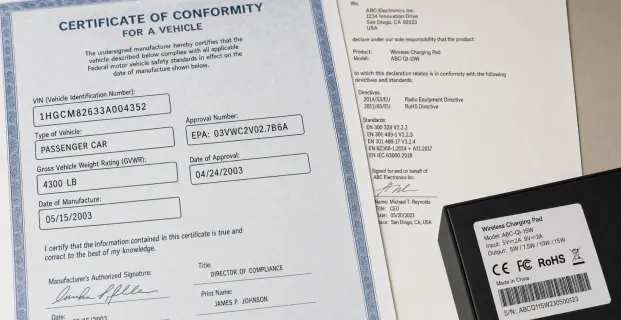
The EU vehicle COC is tied to the vehicle itself and usually includes details such as the VIN, type approval number, manufacturer, engine information, emissions data, dimensions, weight, and other technical specifications. If you want to see how this kind of document is structured, 321COC has a practical explanation of what a Certificate of Conformity example looks like.
The most important difference is purpose. A SABER COC helps with Saudi import compliance. An EU vehicle COC helps with European vehicle registration and administrative approval.
One does not replace the other. A SABER certificate will not normally help you register a vehicle in France, Germany, Spain, Belgium, or another EU country. Likewise, an EU vehicle COC does not automatically satisfy Saudi SABER import requirements for regulated products.
Is a SABER Certificate of Conformity required for vehicles?
It depends on what you mean by vehicles.
If you are importing a complete vehicle into Saudi Arabia, the requirements can involve Saudi customs rules, vehicle import eligibility, Gulf or Saudi technical requirements, and other administrative controls. A general SABER product certificate should not be assumed to be the only document needed for a complete vehicle.
If you are importing automotive spare parts, accessories, tires, batteries, or vehicle-related products into Saudi Arabia, some of those goods may fall under Saudi technical regulations and may require SABER certification. The correct approach is to check the HS code and applicable product category.
If you are registering a car in Europe, the SABER system is not relevant. In that case, you are more likely dealing with an EU vehicle Certificate of Conformity. For vehicle owners comparing different compliance documents, this article on Declaration of Conformity vs COC explains another common source of confusion.
Common mistakes to avoid
The SABER process is not necessarily difficult, but mistakes can create delays. The most common problems usually happen before the application is even submitted.
One frequent mistake is using the wrong HS code. Since the HS code helps determine the product category and applicable regulation, an incorrect code can lead to the wrong certification route.
Another mistake is assuming that a foreign certificate automatically replaces Saudi requirements. CE marking, EU declarations, manufacturer test reports, or other international documents may support the file, but they do not always remove the need for SABER registration or certification.
Importers also sometimes confuse the Product COC with the Shipment COC. Having a valid Product Certificate of Conformity does not necessarily mean a shipment can clear customs without a Shipment Certificate of Conformity.
Labeling is another frequent issue. Product labels, manuals, warnings, language requirements, and packaging details may need to match Saudi regulations. If these items are reviewed late, shipments can be delayed.
How to know which certificate you actually need
Start with the destination and purpose.
If goods are entering Saudi Arabia, ask whether the product is regulated under Saudi rules and whether SABER registration is required. Your Saudi importer, customs broker, or an approved conformity assessment body can help confirm the correct route.
If a vehicle is being imported or registered in the European Union, focus on the vehicle's EU type approval status and whether a vehicle Certificate of Conformity is available. This is especially important when buying a car abroad, moving between EU countries, or registering a used imported vehicle.
If you are unsure because someone simply asked for a "COC," clarify the full context before ordering anything. Ask which country, which authority, which product or vehicle, and which administrative step the document is needed for.
Frequently Asked Questions
Is a SABER Certificate of Conformity the same as a SASO certificate? Not exactly. SASO is the Saudi standards authority, while SABER is the online platform used for product registration and certificate issuance. People sometimes use the terms loosely, but it is more accurate to say that SABER certificates are issued under the Saudi conformity framework supervised by SASO.
Is a SABER Certificate of Conformity required for every product imported into Saudi Arabia? No. Requirements depend on the product type, HS code, and whether the product is regulated. Some products require third-party conformity assessment, while others may follow a self-declaration route.
How long is a SABER Product Certificate of Conformity valid? A Product Certificate of Conformity is typically valid for one year. A Shipment Certificate of Conformity is shipment-specific and applies to the shipment for which it was issued.
Can an EU vehicle COC replace a SABER Certificate of Conformity? No. An EU vehicle COC is used for European vehicle type approval and registration purposes. A SABER Certificate of Conformity is used for Saudi import compliance.
Who applies for the SABER Certificate of Conformity? The Saudi importer is usually responsible for applying through SABER, although exporters and manufacturers often provide the technical documents, test reports, and product information needed for approval.
Need an EU vehicle COC instead of a SABER certificate?
If your goal is Saudi import clearance, you should use the official SABER route and work with the Saudi importer, broker, or approved conformity body.
If your goal is to register or import a vehicle in Europe, you may need an official EU vehicle Certificate of Conformity instead. 321COC specializes in official vehicle COCs for many brands across Europe, with online ordering, transparent pricing, secure checkout, and fast delivery.
You can start your request through 321COC's online Certificate of Conformity service and make sure you are ordering the right document for your vehicle registration process.