What a COC Document Includes for Car Registration
JUMP AHEAD IN THIS ARTICLE
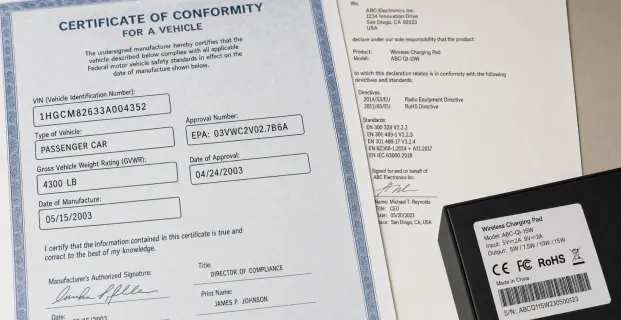
A COC document is one of the most important technical papers used when registering an imported or previously unregistered vehicle in Europe. It does not simply say that a car is “approved.” It lists the vehicle’s official type-approval identity and the technical characteristics that registration authorities use to create or verify the national registration record.
If you are preparing a car registration file, understanding what the COC document includes can help you spot missing information, avoid delays, and answer questions from the registration office more confidently.
What is a COC document?
A COC document, or Certificate of Conformity, is an official document issued by the vehicle manufacturer or its authorized representative. It confirms that a specific vehicle conforms to an approved EU type and can be registered in an EU or EEA country without needing a full individual technical approval in many standard cases.
The legal framework for EU vehicle type approval is set out in Regulation (EU) 2018/858, which covers the approval and market surveillance of motor vehicles and their trailers. In practical terms, the COC connects one specific car, identified by its VIN, to the manufacturer’s approved technical data.
A COC is especially useful when a vehicle is imported from one European country to another. For a broader explanation of how it supports registration, you can read 321COC’s guide to the COC Certificate of Compliance for EU registration.
Why registration authorities ask for a COC document
When you register a vehicle, the authority needs to know more than the brand, model, and VIN. It must verify that the vehicle is identifiable, road-approved, and technically classifiable under national registration rules.
The COC document helps authorities confirm details such as:
- The vehicle’s manufacturer and commercial name
- The EU type-approval number
- The vehicle identification number, or VIN
- The category of vehicle, such as passenger car or light commercial vehicle
- The engine or motor characteristics
- CO2 emissions, fuel consumption, or energy consumption data
- Dimensions, weights, axle loads, and tire specifications
- Seating capacity and other classification details
These details can affect the registration certificate, road tax, environmental classification, inspection requirements, and in some countries, import procedures or administrative fees.
Main information included in a COC document
The exact layout can vary depending on the vehicle brand, model year, and approval framework. However, a valid COC document generally follows a recognizable structure. If you want a document-focused overview of the layout itself, 321COC also explains the typical conformity certificate format for imported cars.
Below are the key sections you should expect to find.
Manufacturer and vehicle identification details
The first section of a COC document usually identifies the manufacturer and the specific vehicle. This is the foundation of the entire certificate.
Common identification fields include the manufacturer’s name, manufacturer address, make, commercial name, vehicle type, variant, version, and VIN. The VIN is especially important because it links the COC to one exact vehicle, not just to a model range.
Registration offices often compare the VIN on the COC with the VIN on the vehicle, the purchase documents, the previous registration certificate, and any customs or import paperwork. A typo or mismatch can cause delays, even if the vehicle itself is compliant.
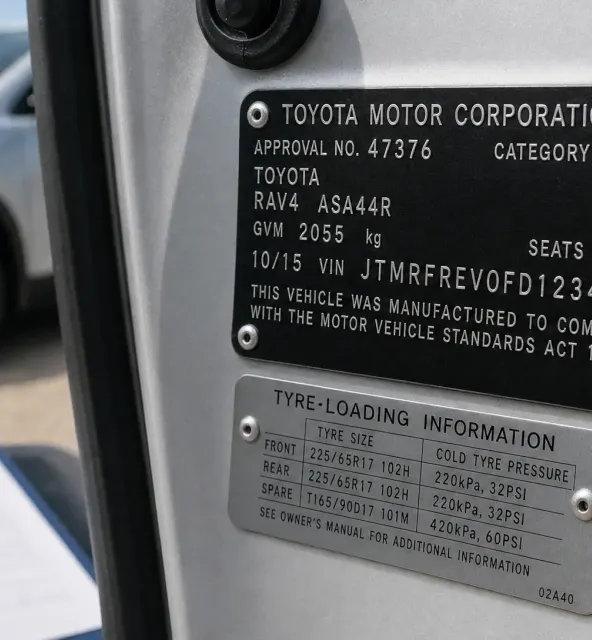
The document may also include the manufacturer’s statutory plate information. This is the plate or label attached to the vehicle that shows key manufacturer data, often including the VIN and maximum weights.
EU type-approval information
One of the most important parts of the COC document is the type-approval reference. This usually appears as an EU type-approval number.
The type-approval number proves that the vehicle type has been assessed under the relevant EU framework. It tells the authority that the vehicle belongs to an approved type, provided the VIN and version match the certificate.
This section may include:
- The EU type-approval number
- The date of type approval or certificate issue
- The vehicle category
- The type, variant, and version codes
- References to the applicable regulatory approval
This information is particularly important when a vehicle has been imported from another EU country and the registration authority needs a standardized technical basis for local registration.
Vehicle category and body type
The COC document identifies the official vehicle category. For most private car owners, this is usually category M1, meaning a passenger vehicle designed and constructed for carrying passengers and comprising no more than eight seats in addition to the driver’s seat.
Other categories may apply to vans, commercial vehicles, trailers, motorcycles, and special-purpose vehicles. The category matters because it can influence the registration class, tax rules, inspection requirements, and permitted use of the vehicle.
The COC may also describe the bodywork type, such as sedan, hatchback, estate, coupe, convertible, multipurpose vehicle, or van. Registration authorities use this information to describe the vehicle correctly in their system.
Dimensions and weight data
Vehicle dimensions and masses are another major part of the COC document. These figures are not just technical trivia. They help authorities determine whether the vehicle fits within the correct legal category and whether its registration data is complete.
Typical fields include overall length, width, height, wheelbase, track width, mass in running order, technically permissible maximum laden mass, and axle load limits.
The mass in running order generally refers to the vehicle’s weight in a standard operating condition. The technically permissible maximum laden mass indicates the maximum total weight allowed by the manufacturer. Axle loads show how much weight can legally be carried on each axle.
These values may be used for commercial rules, trailer towing permissions, road tax calculations, and technical inspection references. For heavier or modified vehicles, weight data becomes especially important.

Engine, motor, and powertrain information
A COC document includes the vehicle’s powertrain details. For a petrol or diesel vehicle, this normally includes information such as engine capacity, fuel type, maximum net power, engine code or engine family reference, and sometimes engine speed at maximum power.
For hybrid and electric vehicles, the fields can vary depending on the approval and document format. The COC may include electric motor power, fuel type combinations, energy consumption, electric range, and other data relevant to the vehicle’s registration and environmental classification.
For registration purposes, powertrain data helps determine the correct technical description of the vehicle. In some countries, horsepower, kilowatts, engine displacement, fuel type, or CO2 emissions directly affect registration tax or annual road tax.
Emissions, CO2, and environmental data
Environmental information is one of the most important reasons authorities rely on the COC document. The certificate may include CO2 emissions, exhaust emission standard, fuel consumption, sound level, and sometimes particulate or pollutant-related data depending on the approval type.
For combustion vehicles, CO2 values and Euro emissions standards can affect taxation, low-emission zone eligibility, company car calculations, and environmental labels. In many European countries, these details must be entered accurately during registration.
For electric vehicles, the COC may include energy consumption and electric range information. For plug-in hybrids, the document may show weighted CO2 emissions, fuel consumption, and electric energy consumption values.
It is important to note that emissions data can vary depending on the test procedure used for the vehicle’s approval, such as older NEDC values or newer WLTP values. Registration authorities may apply national conversion or taxation rules based on the available values and the vehicle’s date of first registration.
Tires, axles, and braking information
The COC document often lists axle and tire information, including approved tire sizes, wheel configurations, axle load ratings, and sometimes braking system details.
This information helps confirm that the vehicle is registered with specifications consistent with its approved configuration. It can also be useful later if a technical inspection station checks whether the installed tires are among the approved sizes.
For everyday car owners, the tire section may seem less important than the VIN or emissions fields. However, it can become relevant if the car has non-standard wheels, imported specifications, or equipment differences between countries.
Seating capacity and vehicle use details
The COC document normally states the number of seating positions, including the driver. For passenger cars, this is usually straightforward, but it can be more significant for vans, minibuses, camper conversions, and special-purpose vehicles.
Registration authorities use seating capacity to classify the vehicle and ensure that the registration record matches the actual configuration. If a vehicle has been modified, for example from a van to a camper or from a commercial layout to a passenger layout, the original COC may not be enough to reflect the current condition. In such cases, national approval or inspection requirements may apply.
Trailer towing and coupling data
Many COC documents include towing-related figures, especially for passenger cars, SUVs, and vans. These may include technically permissible towable mass, braked trailer weight, unbraked trailer weight, and maximum vertical load on the coupling point.
This information helps determine what the vehicle is legally permitted to tow. It can be entered on the registration certificate in some countries and may affect insurance, roadside checks, and technical inspections.
If towing capacity is important to you, check this section carefully before buying or importing a vehicle. Similar-looking versions of the same model can have different towing limits depending on engine, transmission, drivetrain, and approval variant.
What a COC document does not include
A COC document is powerful, but it is not a replacement for every vehicle document. Many registration delays happen because owners assume the COC covers more than it actually does.
A COC document usually does not prove legal ownership. It is not a sales invoice, title document, customs clearance certificate, insurance document, or roadworthiness inspection certificate. It also does not automatically prove that taxes or import duties have been paid.
In most registration cases, you will still need additional documents such as proof of identity, proof of address, purchase invoice or sales contract, previous registration certificate, insurance confirmation, and any country-specific tax or customs documents.
Think of the COC as the vehicle’s official technical identity sheet. It supports registration, but it works alongside the rest of your administrative file.
How to check whether your COC document is complete
Before submitting your registration application, take a few minutes to review the COC document. Small issues can lead to back-and-forth requests from the registration office.
Start with the VIN. It should match the vehicle and all other documents exactly, character for character. Pay close attention to common visual confusion between characters such as 0 and O, or 1 and I, depending on the document format.
Next, check the make, commercial name, type, variant, and version. These should be consistent with the vehicle you are registering. Then review key technical data such as fuel type, engine power, CO2 emissions, mass, and seating capacity.
Also check whether the document appears to be an official COC rather than a generic specification sheet. An official COC should come from the manufacturer or an authorized source and contain standardized type-approval data.
If you still need to request one, ordering through a provider that handles official vehicle certificates can reduce avoidable mistakes. For example, 321COC provides an online process for official Certificates of Conformity across many brands, with secure checkout, transparent pricing, and fast delivery options depending on the vehicle and request.
Common issues that can delay registration
Even when the vehicle is eligible for registration, the COC document can create delays if the information is incomplete, inconsistent, or not accepted by the relevant authority.
Common problems include an incorrect VIN, a COC issued for the wrong variant, missing pages, unreadable scans, or a document that is not an official manufacturer-issued certificate. Another frequent issue is submitting a COC for a vehicle that has been modified after manufacture, because the original COC may no longer describe the current vehicle accurately.
Delays can also happen when the vehicle is too old to have an EU COC, was originally built for a non-EU market, or does not have European whole vehicle type approval. In these cases, the registration authority may require another procedure, such as national individual approval or additional technical inspection.
If your main question is whether you need a COC at all for an imported vehicle, 321COC’s guide on whether you need a COC to register an imported car explains the typical scenarios in more detail.
How the COC document is used during registration
During registration, the authority or registration service uses the COC document to populate the vehicle record. The VIN identifies the vehicle, while the type-approval and technical sections confirm its official specifications.
The data from the COC may be transferred into the national registration certificate. This can include fields such as make, type, variant, version, category, mass, fuel type, power, emissions, seating capacity, and sometimes towing limits.
In some countries, the COC also helps calculate registration-related taxes or environmental fees. This is why accurate CO2 and fuel data can be financially important, not just administratively useful.
Once the vehicle is registered, the COC may not be needed for daily driving. However, it is worth keeping safely with your vehicle records. It can be useful for resale, export, re-registration, technical checks, or correcting registration data later.
Frequently Asked Questions
Is a COC document the same as a registration certificate? No. A COC document confirms the vehicle’s conformity with an approved type and lists its technical data. A registration certificate is issued by the national authority after the vehicle is registered.
Does every car have a COC document? Not every car has an EU COC. It is generally associated with vehicles built under EU type approval. Older vehicles, non-EU market vehicles, modified vehicles, or certain special-purpose vehicles may require a different approval or registration route.
Can I register a car with a copy of the COC? This depends on the country and authority. Some may request the original document, while others may accept a certified or digital process. Always check local registration rules before submitting your file.
What is the most important information on a COC document? The VIN, EU type-approval number, vehicle category, type-variant-version, emissions data, engine or motor data, weights, dimensions, and seating capacity are among the most important fields for registration.
What should I do if the COC data does not match my vehicle? Do not ignore the mismatch. Contact the certificate provider, manufacturer representative, seller, or registration authority before submitting the application. A mismatch can delay or prevent registration.
Need an official COC document for registration?
A complete and accurate COC document can make the registration process much easier, especially when importing a vehicle within Europe. It gives the registration authority the technical data needed to identify, classify, and record the vehicle correctly.
If you need to order an official Certificate of Conformity, 321COC offers a secure online process for many vehicle brands, with EU-compliant documents, transparent pricing, and money-back protection. Preparing the right document before you start your registration application is one of the simplest ways to avoid unnecessary delays.